English| EUR
Suggested for you
More currencies
Choose a language
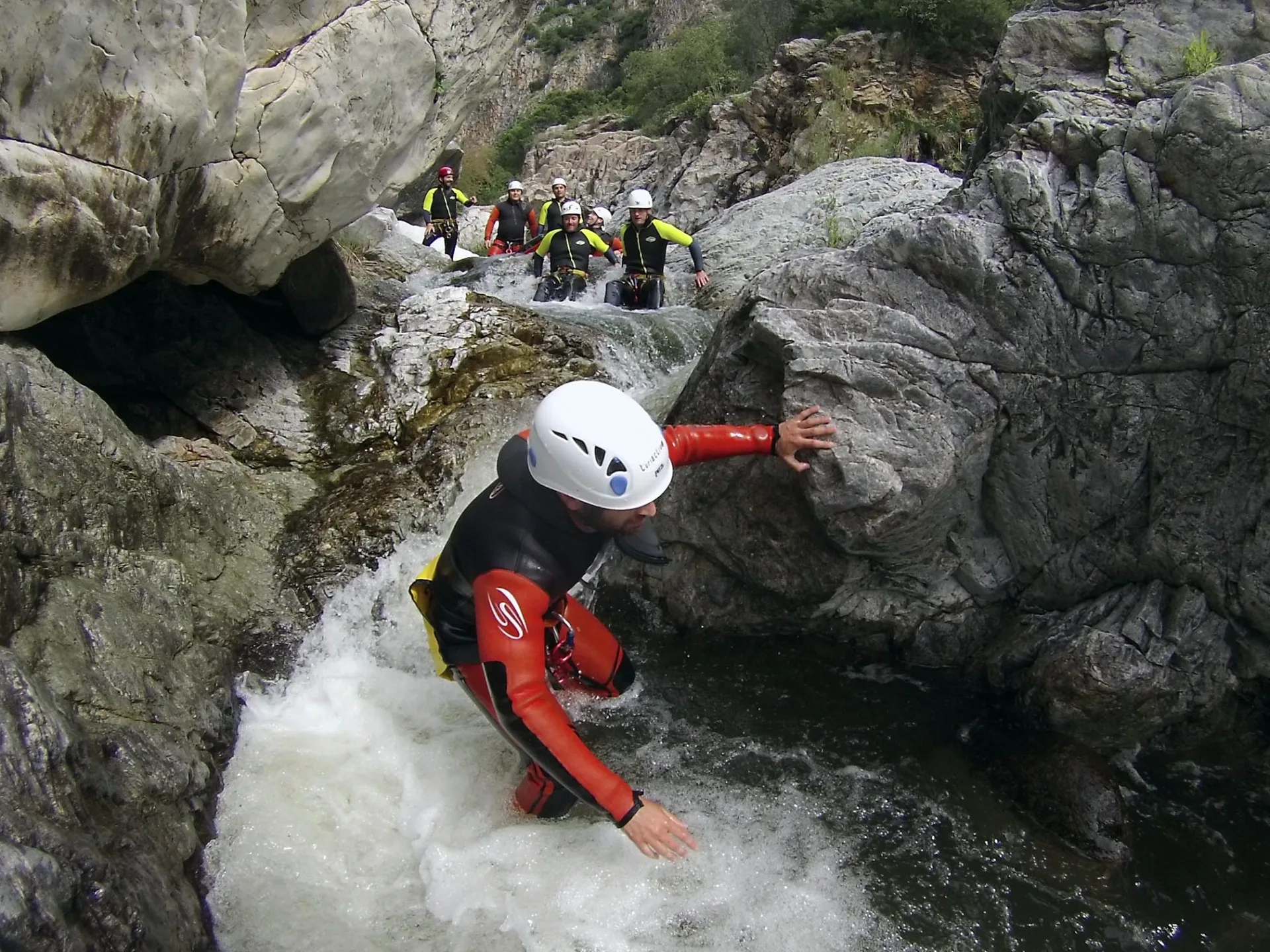
The Guadalmina River carves through the Sierra de las Nieves foothills west of Benahavís, offering a technical canyon descent with natural slides, pools, and rappel stations. This guide covers the route layout, access logistics, and what the terrain asks of participants.
Quick answer
Canyoning in Benahavis Rio Guadalmina takes place along the Río Guadalmina gorge, accessed via Las Angosturas off the A-7175 road. The descent runs approximately 3 hours and includes a mix of rappels, jumps, and natural water slides through limestone narrows. River access is available daily from 10:00 to 20:00, with no entrance fee charged for the natural area.
The Guadalmina River cuts a narrow gorge through the limestone ridges separating Benahavís from the coastal plain, and the canyon it has carved over millennia now serves as one of the Costa del Sol's most technical aquatic descents. The riverbed drops through a series of sculpted channels, each segment presenting a different challenge: smooth water slides that funnel participants into emerald pools, vertical drops requiring rope work, and tight passages where the rock walls close to shoulder width. The geology here is porous limestone, which means the watercourse varies with seasonal rainfall but never fully dries, fed by underground springs even in the height of summer. The route begins at the upper access point near Las Angosturas, where the A-7175 crosses the river. From here, participants descend through a sequence of natural obstacles over roughly three hours, finishing at a lower egress point downstream. The descent is not a hike punctuated by obstacles; it is continuous problem-solving in moving water. Each rappel station is equipped with fixed anchors drilled into the rock, but participants must rig their own lines and manage their own safety systems under the supervision of a certified guide. The canyon's reputation rests on its variety: no two sections repeat the same challenge, and the water depth shifts with the season, altering the character of jumps and slides from one month to the next. Canyoning in Benahavis Rio Guadalmina demands both technical competence and physical endurance. The limestone walls are polished smooth by centuries of flow, offering little friction for bracing or recovery, and the water temperature hovers in the mid-teens Celsius even in August. Wetsuits, helmets, and harnesses are mandatory, not recommended. The route's difficulty rating sits at the intermediate level, which assumes participants can swim confidently in moving water, manage a descender device on rope, and maintain composure when submerged unexpectedly. The canyon does not forgive hesitation: once the descent begins, retreat is more difficult than continuation, and the terrain offers few bailout points until the final pool. The surrounding landscape is Sierra de las Nieves backcountry, a protected biosphere reserve where Spanish fir and cork oak cover the upper slopes. The canyon itself is a microclimate, cooler and damper than the surrounding hillsides, with ferns and moss clinging to the shaded rock faces. Wildlife sightings are common but fleeting: Iberian frogs, dragonflies in iridescent blue, and occasional griffon vultures circling the thermals above the gorge. The remoteness is part of the appeal, but it also means mobile coverage is intermittent and emergency egress requires coordination with local rescue services based in Benahavís village. Participants typically arrive early in the day to allow the full three-hour descent and avoid the afternoon heat on the approach hike. The river area operates on an open-access model, with no ticketed entry, but guided descents are the standard practice due to the technical nature of the route and the absence of marked paths or rescue infrastructure. The experience is as much about reading water and rock as it is about physical exertion, and those who return speak less of adrenaline and more of the focused attention required to move through a landscape shaped entirely by erosion and gravity.
“The canyon does not forgive hesitation: once the descent begins, retreat is more difficult than continuation.”
The optimal period for canyoning in Rio Guadalmina is during the spring and early autumn months, specifically targeting an arrival between 10:00 and 14:00. This window helps visitors avoid peak afternoon congestion and provides the necessary daylight hours to complete the three-hour excursion safely.
Mild 18°C to 24°C
Water levels are stable and ideal for canyoning activities. Consistent flow makes navigation through the canyon more predictable.
Warm 25°C to 30°C
Summer sees the highest volume of visitors. Early morning entry is necessary to secure space and comfortable temperatures.
Mild 20°C to 26°C
This period offers reduced crowding as peak tourism subsides. Water remains warm enough for swimming and canyoning maneuvers.
—
Arriving at 10:00 during weekdays minimizes contact with large groups. This timeframe ensures sufficient time to navigate the route without pressure.
Verdict: The best time to visit is on a weekday between 10:00 and 14:00 during the months of May, June, or September.
The canyoning area at Rio Guadalmina is accessible daily throughout the week.
The canyoning route for Rio Guadalmina is located at Las Angosturas, situated along the A-7175 road. The most practical approach for visitors is via private vehicle or taxi to reach the designated access point near Benahavís.
Take the A-7 toward Benahavís, then follow the A-7175 to the Las Angosturas trailhead.
Request a direct drop-off at Las Angosturas, A-7175, 29679 Benahavís.
Walk from the Benahavís village center toward the Las Angosturas canyon entrance.
Parking at Las Angosturas is limited; aim to arrive between 10:00 and 14:00 to secure a space and avoid the peak afternoon crowds.
Canyoning in Rio Guadalmina requires proper equipment and advance coordination to ensure a safe descent through the gorge.
Everything you need to know about canyoning in benahavis rio guadalmina
The Guadalmina River offers a manageable descent that is widely considered accessible for beginners. This aquatic route features natural water slides and jump points that provide excitement without requiring advanced technical expertise.
There is no entrance fee to access the river area, as it is a public space. While entry is 0 EUR, you may choose to hire a professional guide for safety and equipment support during your canyoning in benahavis rio guadalmina excursion.
The experience typically requires about 3 hours to complete the full route through the gorge. This duration allows participants to enjoy the pools and rock formations at a steady, comfortable pace.
To enjoy the best experience, we recommend an arrival window between 10:00 and 14:00. Arriving early helps you avoid the peak afternoon crowds and ensures sufficient daylight for the full 3-hour experience.
The route is generally family-friendly, provided children are comfortable with water and swimming in natural pools. Adult supervision is required at all times to ensure safety throughout the river descent.
While the river area is public, arranging a guided tour is highly recommended for safety and gear. You can explore booking options through the official site to ensure a structured and safe outing.